LNEYA Промышленные чиллеры Производитель Поставщик


Advantages of laboratory low-temperature circulators
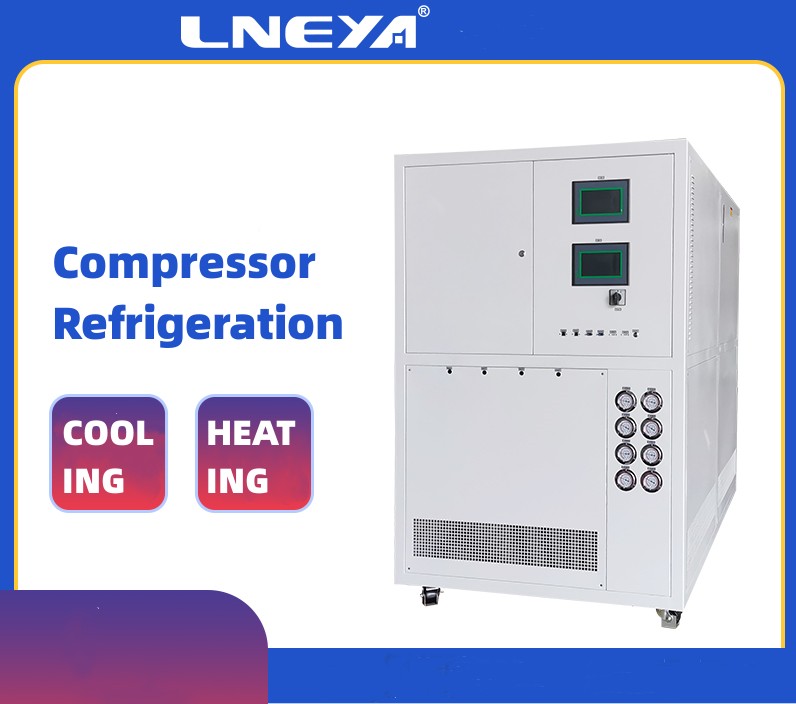
The laboratory low-temperature circulator can simultaneously provide constant temperature and current refrigeration, heating, and temperature control equipment. The laboratory low-temperature circulator has a reasonable structure, simple operation, and good stability.
1. The laboratory low-temperature circulator uses a compressor for refrigeration, which consumes energy and improves the exhaust temperature. The refrigerant then exchanges heat with the surrounding medium under the right conditions, transferring the heat to the surroundings. If adiabatic expansion is carried out again, the temperature will decrease.
2. The laboratory low-temperature circulator absorbs isothermal heat from high-temperature objects through an evaporator to reduce the temperature of the object to be cooled. This cycle is continuously carried out to achieve the purpose of cooling. The design of the laboratory low-temperature circulator refrigeration system uses energy regulation technology. Effective treatment methods can not only ensure the normal operation of the refrigerator, effectively control the energy consumption and cooling capacity of the refrigeration system, reduce the operating cost of the experimental box refrigeration system, and achieve a more economical state.
3. The laboratory low-temperature circulator absorbs the heat of the object to be cooled from the evaporator and evaporates it with steam. The compressor continuously extracts the steam generated by the evaporator.
4. The high-temperature and high-pressure steam compressed by the laboratory low-temperature circulator is sent to the condenser, where the cooling medium (such as water, air, etc.) releases heat and condenses into a high-pressure liquid. The pressure is reduced through a throttling mechanism to enter the evaporator. Evaporate again, absorb the heat from the cooled object, and circulate in this way.
5. After the laboratory low-temperature circulator mechanism heats up, the refrigerant changes its flow through a four-way valve. The flow direction of the refrigerant is exactly opposite to the refrigeration process. The refrigerant first passes through the evaporator, then returns to the condenser, and then returns to the compressor.
Похожие рекомендации
-
Как выбрать охладитель и машину для литья под давлением?
1712A. Первый способ: охладитель 1HP с водяным охлаждением может быть оснащен 80-тонной машиной для литья под давлением, и температура может контролироваться на 5-10 градусов.Охладитель 1HP с водяным охлаждением может быть оснащен 100-тонной машиной для литья под давлением, и...
Посмотреть детали -
What do You Know about Centrifugal Cryogenic Chillers before Use?
1843There are some differences in the use of cryogenic chillers between different compressors, but not very much of it. Due to the different styles of different compressors, the points to pay attention to during operation are also different. For examp...
Посмотреть детали -

What do the LNEYA chiller fault codes mean? What is the solution?
2510Q: What is the fault code of the chiller? Answer: E1 means extremely high indoor temperature alarm, E2 means extremely high temperature alarm, E3 means extremely low temperature alarm, E4 means indoor temperature controller failure, E5 means water...
Посмотреть детали -
Importance Of The Low Temperature Chamber
1407The low temperature chamber is a large cryogenic or high-cryogenic test device, which usually separates the refrigerator from the test part and makes the test part into a room type, so the staff can work in it. Such a test room is called a low tem...
Посмотреть детали