LNEYA Промышленные чиллеры Производитель Поставщик


Classification and advantages and disadvantages of commonly used chillers
What are the classification and advantages and disadvantages of chillers? Let us take a look together today.
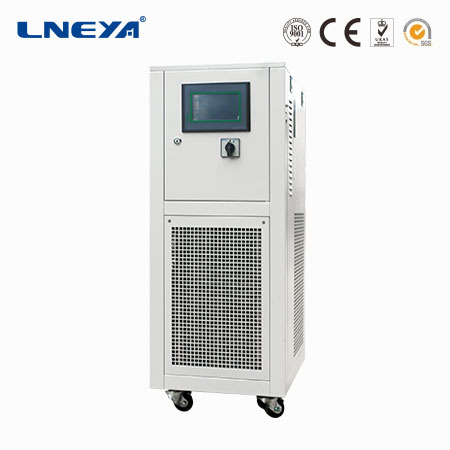
1. Various classification methods of chillers
1. According to condenser cooling method: water-cooled chiller and group air-cooled water chiller.
2. According to the refrigerant load: water-cooled chiller, brine chiller, glycol chiller.
3. According to the compressor form: piston chiller, screw chiller and centrifugal chiller.
4. According to the form of energy utilization: single cold heat pump type, heat recovery type and single cold ice storage dual function type
5. According to the cold water outlet temperature: air-conditioning type (7 degrees, 10 degrees, 13 degrees, 15 degrees) and low temperature type (-5 degrees to -30 degrees).
6. According to the sealing method: open, semi-enclosed, and fully enclosed.
7. By fuel type: oil type (diesel, heavy oil) and gas type (kerosene, natural gas).
8. Different according to energy compensation: power compensation (compression type) and thermal compensation (absorption type).
9. According to refrigerant: R22R123, R134a
10. According to different heat sources (absorption type): hot water type, steam type, direct combustion type.
2. The advantages and disadvantages of various chillers
Piston chiller
advantage:
1. The material is simple, general metal materials can be used, the processing is easy, and the cost is low.
2. The system device is simple, easy to lubricate, and does not require an exhaust device.
3. With multiple heads, high-speed multi-cylinders, performance can be improved.
Disadvantages:
1. There are many spare parts, many wearing parts, complicated and frequent maintenance, and high maintenance cost.
2. The compression ratio is low, and the cooling capacity of a single unit is small.
3. The adjustment performance of the single machine head is poor under partial load, and the unloading adjustment can not be stepless adjustment.
4. It belongs to up and down reciprocating motion, and the vibration is large.
5. Large weight index per unit cooling capacity
Screw chiller
advantage:
1. Simple structure, few moving parts, few wearing parts, only 1/10 of the piston type, low failure rate and long life.
2. Smooth circular motion, no “surging” phenomenon during low load operation, low noise and low vibration.
3. The compression ratio can be as high as 20, and the EER value is high.
4. Convenient adjustment, stepless adjustment within the range of 10%~100%, high efficiency under partial load, and significant power saving.
5. Small size and light weight, it can be used as a built-up fully enclosed large-capacity unit.
6. Not sensitive to wet stroke.
7. It belongs to positive pressure operation, and there is no problem of external air intrusion and corrosion.
Disadvantages:
1. The price is higher than the piston type.
2. The capacity of single machine is smaller than that of centrifugal type, and the speed is lower than that of centrifugal type.
3. The lubricating oil system is more complicated and consumes a lot of fuel.
4. The noise of large-capacity unit is higher than that of centrifugal type.
5. High processing precision and assembly precision are required.
Modular chiller
advantage:
1. It is an improved type of piston chiller and screw chiller. It is composed of multiple chillers.
2. The unit is small in size, light in weight, low in height and small in area.
3. Simple installation, no need to reserve installation holes, convenient on-site assembly, especially suitable for renovation projects.
Disadvantages:
1. The price is more expensive.
2. The number of modules should not exceed 8 in general.
Water source heat pump unit
advantage:
1. Save energy and recover heat when running in winter.
2. There is no need for refrigerating machine room, no big ventilation ducts and circulating water pipes, and no heat preservation, reducing the cost.
3. Easy to measure.
4. Convenient installation and low maintenance cost.
5. Flexible application and convenient adjustment.
Disadvantages:
1. The fresh air cannot be used to the fullest extent during the transition season.
2. The unit is noisy.
3. Most of the units are installed in the ceiling, which brings a certain degree of difficulty to maintenance
To Sum Up
In summary, we gave a detailed introduction to the types of chillers and the advantages and disadvantages of each type. LNEYA specializes in the development and production of cooling water circulators. The temperature of the heat transfer liquid can be adjusted. It adopts international brand accessories and has stable performance.
Похожие рекомендации
-

Как очистить систему управления воздухом?
1845In order to respond to the requirements of the two types of society in the country, environmental protection and conservation have become increasingly important. Therefore, in order to extend the life of the product, it is still necessary to have ...
Посмотреть детали -
What are the refrigerants for the 120-degree ultra-low temperature freezer?
2079The refrigerants of different ultra-low temperature freezer manufacturers are different. The refrigerants commonly used in LNEYA refrigeration equipment are R404, R22, etc. So, what is the difference between the two-120-degree ultra-low temperatur...
Посмотреть детали -
Анализ работы и промышленного применения чиллера
1684Although there are many different types of chillers, most use the same cooling principle. An important part of the process is the coolant or refrigerant, which holds more heat than water and helps maintain an efficient cooling process. Heat is rem...
Посмотреть детали -
How to solve the lack of cooling capacity of the semiconductor cooling cycle system?
1715The semiconductor cooling cycle system is a device for cooling the heating part of the semiconductor in the refrigeration equipment. It is commonly used to test semiconductor IC parts, automotive electronic parts, optical fiber components, telecom...
Посмотреть детали